
I like to think of effective pedagogy as creating a learning environment where learning feels natural and engaging rather than following a rigid structure. I’ve experienced a variety of different pedagogical approaches which has helped me appreciate certain methods of teaching. A lot of my programming skills came from learning through YouTube videos from various different creators. Some were good and some not-so-good. My learnings through module two in EDCI339 have helped me understand what makes the difference.
Cognitivism in Online Learning
I noticed that the online creators who did a good job at explaining had a habit of using strong visualization tools and taking advantage of the video + speaking presentation format.

The use of beautiful visualizations often created a strong impression that helped me recall the concepts I was learning later. This is especially true when the video was broken down into small digestible chunks as not to overload your brain with new information.
According to George A. Miller, an American psychologist, chunking is imperative for presenting content that can be remembered easily (Miller, 1956). This seems to generalize past digital presentation. For example, if someone presents a slide deck where each slide is densely packed with text, it’s difficult to retain much of what they are saying.
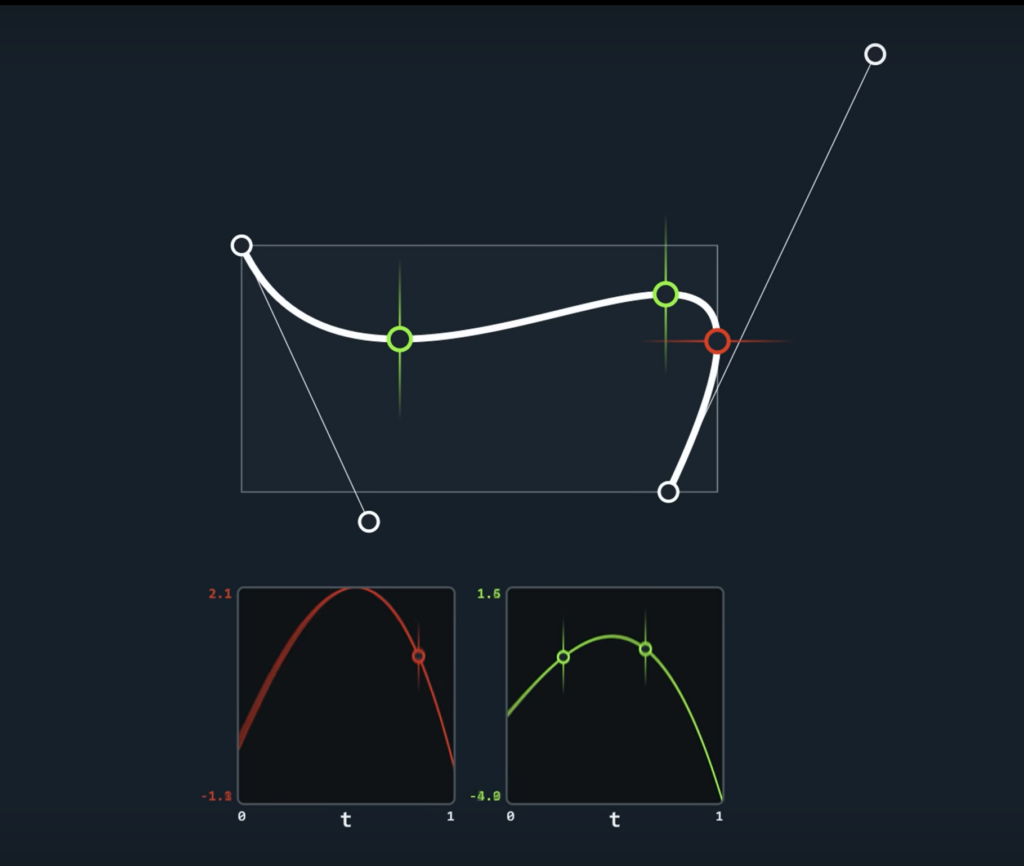
When information was presented in chunks that connected one after another, I often found myself learning through “discovery”. Essentially after being presented a couple chunks of information, I could start to see the connection between them before the instructor actually told me what that connection is. Presenting information this way fueled my curiosity and by nature, my engagement. I also was able to retain a lot more of what I learned since I could understand why certain things happen opposed to understanding that comes from rote memorization. This process reminds me of some things I’ve picked up from Andrew Huberman– a neuroscientist that has a podcast and produces YouTube videos. For example, one thing that stuck with me was how you, as a student, you can help yourself retain information by doing something that spikes adrenaline after learning something.
Another thing that well-organized creators also did– they took advantage of the fact that their videos were not live-streamed, so they could edit out mistakes they made while speaking and really refine what they wanted to say in their video format. This helped to trim down any excess information or mistakes that can happen in a live teaching session.
The Role of the Instructor
I think the role of an instructor can be summarized into a strong points, based on what I’ve noticed in inspiring instructors I’ve had before.
- Be able to break down complex information into organized chunks
- Don’t assume the student’s knowledge of anything. I noticed that instead if an online instructor didn’t want to explain something they would say, “if you don’t know what this is, learn about it first and come back to this video”.
- Show the student why you became an instructor on the topic. To maintain engagement, you yourself should be engaged and excited about the material. That kind of energy rubs off on the learner.
References
Miller, G. A. (1956). The magical number seven, plus or minus two: Some limits on our capacity for processing information. Psychological Review, 63(2), 81-97. https://doi.org/10.1037/h0043158

Leave a Reply